| Titre : |
The benthic boundary layer |
| Type de document : |
texte imprimé |
| Auteurs : |
Boudreau, Bernard P., Auteur |
| Editeur : |
Oxford |
| Année de publication : |
2001 |
| Importance : |
404 p. |
| Format : |
24 cm. |
| ISBN/ISSN/EAN : |
978-0-19-511881-0 |
| Langues : |
Anglais (eng) |
| Index. décimale : |
552 Pétrologie : pétrographie, roches |
| Résumé : |
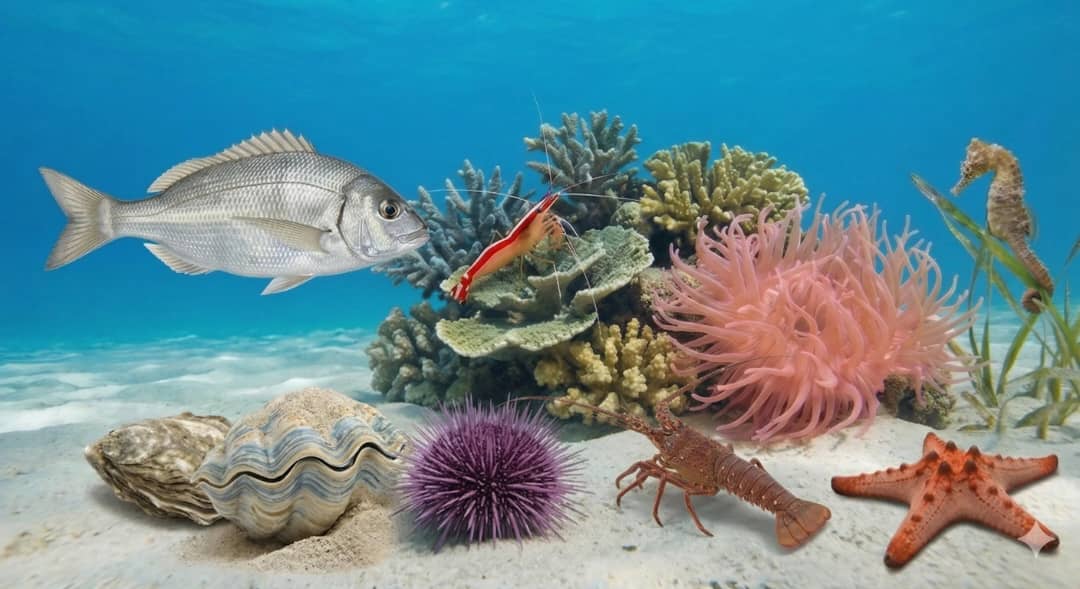
The benthic boundary layer (BBL) constitutes those portions of sediment and water columns that are affected directly in the distribution of their properties and processes by the presence of the sediment water interface. This zone has great importance to the biology, chemistry, geology, and physics of the oceans, seas, lakes, and even rivers. For example, the bottom is the primary site for the dissipation of current, wave, and turbulent energies; it is the locus for the exchange of heat, solutes or particulates between the water column and the bed; diagnosis of deposited material is most intense in its vicinity; and it represents the environment where a wide variety of benthic animals, plants, and microorganisms live (see chapters 13, 14, and 15). Furthermore, it is a locus of intense transport, both vertical and lateral, of solutes and suspended particles (see chapters 4, 5, and 9) and of high chemical and biological reactivity.
Various definitions exist for the BBL, depending on the scale, properties or phenomena of interest. Different disciplines emphasize those properties of greatest consequence to their own field(s), accompanied by different definitions, nomenclature and standard methods for measurement. |
The benthic boundary layer [texte imprimé] / Boudreau, Bernard P., Auteur . - Oxford, 2001 . - 404 p. ; 24 cm. ISBN : 978-0-19-511881-0 Langues : Anglais ( eng)
| Index. décimale : |
552 Pétrologie : pétrographie, roches |
| Résumé : |
The benthic boundary layer (BBL) constitutes those portions of sediment and water columns that are affected directly in the distribution of their properties and processes by the presence of the sediment water interface. This zone has great importance to the biology, chemistry, geology, and physics of the oceans, seas, lakes, and even rivers. For example, the bottom is the primary site for the dissipation of current, wave, and turbulent energies; it is the locus for the exchange of heat, solutes or particulates between the water column and the bed; diagnosis of deposited material is most intense in its vicinity; and it represents the environment where a wide variety of benthic animals, plants, and microorganisms live (see chapters 13, 14, and 15). Furthermore, it is a locus of intense transport, both vertical and lateral, of solutes and suspended particles (see chapters 4, 5, and 9) and of high chemical and biological reactivity.
Various definitions exist for the BBL, depending on the scale, properties or phenomena of interest. Different disciplines emphasize those properties of greatest consequence to their own field(s), accompanied by different definitions, nomenclature and standard methods for measurement. |
|
 |
 The benthic boundary layer