Bibliothèque ENSSMALENSSMAL Library

| Titre : |
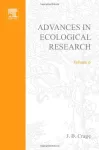
Advances in ecological research (volume 6) |
| Type de document : |
texte imprimé |
| Auteurs : |
Macfadyen, A., Auteur |
| Editeur : |
Academic press |
| Année de publication : |
1969 |
| Importance : |
236 p. |
| Format : |
23 cm |
| ISBN/ISSN/EAN : |
978-0-12-013906-4 |
| Langues : |
Anglais (eng) |
| Index. décimale : |
577 Ecologie |
| Résumé : |
Ecological organization is the resultant of many processes occurring at very different levels of complexity. The outward signs of organization are the patterns of animals and plants which are described by such words as, community or association. The theme of this volume is the understanding of some basic ecological patterns.
The paper by Dr Siniff and Dr Jessen is concerned with a particular type of pattern at the organism level, the concept of "home-range". Their investigations combine two modern techniques, telemetry and computer simulation, and their study constitute an attempt to give precision to an important component of more extensive ecological patterns.
The three other contributions are concerned with the form and organization of patterns at the community level. Dr Langford and Dr Buell discuss the nature of the plant association. There is perhaps no more controversial subject in phyto-sociology and the controversy continues as a glance at Vol. 34 "The Botanical Review" will show. Dr Langford and Dr Buell describe the background out of which modern views on the nature of the plant community have emerged. Above all, they demonstrate the need for precise experimental studies.
The papers by Dr.Maidi and Dr. de Vos share common ground. The trophic web is the pattern through which an ecosystem operates. Dr Mann reviews the dynamics of such patterns in aquatic ecosystems, dealing in detail with the difficulties experienced when attempting to obtain reliable measures of energy flow between trophic levels, and of the exchange and circulation of materials. Dr de Vos is concerned, in the main, with the utilization by man of the wild herbivore component of terrestrial ecosystems. His reviews reveal the tentative and sometimes "guesstimate" nature of much of our information on the production of such systems. Both papers have special relevance in view of current investigations within the international biological program. |
Advances in ecological research (volume 6) [texte imprimé] / Macfadyen, A., Auteur . - Academic press, 1969 . - 236 p. ; 23 cm. ISBN : 978-0-12-013906-4 Langues : Anglais ( eng)
| Index. décimale : |
577 Ecologie |
| Résumé : |
Ecological organization is the resultant of many processes occurring at very different levels of complexity. The outward signs of organization are the patterns of animals and plants which are described by such words as, community or association. The theme of this volume is the understanding of some basic ecological patterns.
The paper by Dr Siniff and Dr Jessen is concerned with a particular type of pattern at the organism level, the concept of "home-range". Their investigations combine two modern techniques, telemetry and computer simulation, and their study constitute an attempt to give precision to an important component of more extensive ecological patterns.
The three other contributions are concerned with the form and organization of patterns at the community level. Dr Langford and Dr Buell discuss the nature of the plant association. There is perhaps no more controversial subject in phyto-sociology and the controversy continues as a glance at Vol. 34 "The Botanical Review" will show. Dr Langford and Dr Buell describe the background out of which modern views on the nature of the plant community have emerged. Above all, they demonstrate the need for precise experimental studies.
The papers by Dr.Maidi and Dr. de Vos share common ground. The trophic web is the pattern through which an ecosystem operates. Dr Mann reviews the dynamics of such patterns in aquatic ecosystems, dealing in detail with the difficulties experienced when attempting to obtain reliable measures of energy flow between trophic levels, and of the exchange and circulation of materials. Dr de Vos is concerned, in the main, with the utilization by man of the wild herbivore component of terrestrial ecosystems. His reviews reveal the tentative and sometimes "guesstimate" nature of much of our information on the production of such systems. Both papers have special relevance in view of current investigations within the international biological program. |
|
 |
Exemplaires(1)
| 577.5 CRA/T6 |
|
13 |
Consultation |
Exclu du prêt |
Accueil

Sélection de la langue
Adresse
Bib'ENSSMAL
Campus Universitaire de Dely Ibrahim Bois des Cars,Alger, Algérie
16320 Dely Ibrahim
ALGER
+213 (0)23 31 24 73
bibliotheque@enssmal.edu.dz